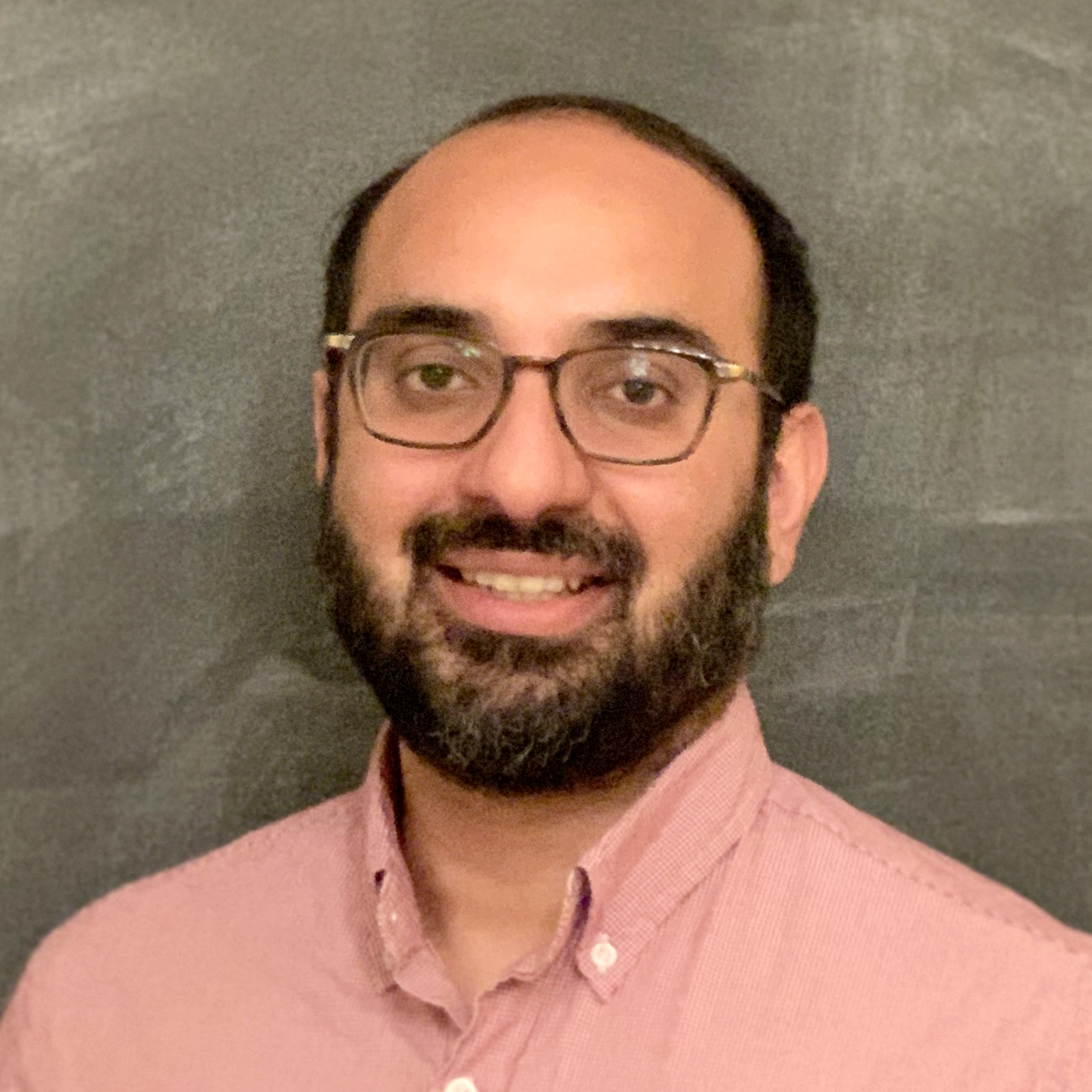
Aly Azeem Khan
Departments of Pathology, Family Medicine, and the College
Principal Investigator, Laboratory for Computational Immunology
University of Chicago
 |
Contact Information University of Chicago email: aakhan@uchicago.edu |
 |
Research Overview
My lab focuses on computational immunology and machine learning, with an emphasis on building predictive models of human immunology. We develop computational methods to understand immune responses across scales by analyzing both the molecular programs within immune cells and their interactions with the tissue microenvironment. We focus on problems that are clinically motivated, computationally tractable, and experimentally testable. A key theme in our research is integrating validated biology, such as lineage phylogeny and tissue context, directly into computational frameworks. This helps ensure our models generate testable and clinically meaningful hypotheses for diagnostics and therapies. As a result, our research has had a broad and significant impact, identifying new problems and methods in immunology that might otherwise have been neglected.Our work is supported by the NIH New Innovator Award (DP2, NIAID), a Chan Zuckerberg Investigator Award, and a Common Mechanisms of Autoimmunity Insight Award.
Background
I obtained my Ph.D. from Cornell University, where I completed my graduate studies in computational biology in a joint program with Memorial Sloan Kettering Cancer Center under Christina Leslie (advisor), Alexander Rudensky and Chris Sander. From 2014 to 2019, I was a member of the research faculty at the Toyota Technological Institute at Chicago (TTIC), where I established a research program in computational immunology. In 2019, I joined the Department of Pathology at the University of Chicago, and in 2022, I also joined the Department of Family Medicine and the College. In 2025, my lab joined the Biohub to advance efforts in AI and immunology.In addition to my academic research (disclosures), I have worked at Merck to improve drug target discovery [1⇗] and collaborated with Genentech on modeling immune regulatory networks ([2⇗], [3⇗], [4⇗] and [5⇗]). From 2016 to 2022, I founded and oversaw the immunology program at Tempus, which included clinical diagnostics and biomarker discovery ([6⇗], [7⇗], [8⇗] and [9⇗]). From 2022 to 2026, I established a computational biology and machine learning research program at 23andMe, initially within Therapeutics on monoclonal antibody development, and later within Research on autoimmunity and genetics ([10⇗], [11⇗] and [12⇗]). In a past life, I took time off during my Ph.D. to work at Bank of America under Robert Almgren to study market impact and microstructure.
Selected Publications
Single-cell B cell genomics
Isotype-aware inference of B cell clonal lineage trees from single-cell sequencing data
Weber LL, Reiman D, Roddur MS, Qi Y, El-Kebir M, Khan AA.
Cell Genomics, 2024 Sep 11;4(9):e1-12.
Pseudocell Tracer—A method for inferring dynamic trajectories using scRNAseq and its application to B cells undergoing immunoglobulin class switch recombination
Reiman D, Manakkat Vijay GK, Xu H, Sonin A, Chen D, Salomonis N, Singh H, Khan AA.
PLOS Computational Biology, 2021 May 3;17(5):e1008094.
BASIC: BCR assembly from single cells
Canzar S, Neu KE, Tang Q, Wilson PC, Khan AA.
Bioinformatics, 2017 Feb 1;33(3):425-427.
TCR-pMHC modeling
Deep peptide recognition profiling decodes TCR specificity and enables disease-associated antigen discovery
Wang N, Yeh H, Lai B, Perera J, Jude KM, Risch I, Um J, Chen X, Xiang X, Wang C, Liu LD, Yang X, Paley MA, Khan AA+, Garcia KC+.
Nature Biotechnology, 2026 May 13:10.1038.
DecoderTCR: Compositional Pretraining and Entropy-Guided Decoding for TCR-pMHC Interactions
Lai B, Englund M, Bharanikumar R, Nocedal I, Davariashtiyani A, Perera J, Khan AA.
International Conference on Machine Learning (ICML), 2026.
Machine learning for biology
Virtual Cells Need Context, Not Just Scale
Dibaeinia P, Babu S, Knudson M, ElSheikh A, Wen Y, Liu H, Perera J, Khan AA
International Conference on Machine Learning (ICML), 2026.
PRSformer: Disease Prediction from Million-Scale Individual Genotypes
Dibaeinia P, German C, Shringarpure S, Auton A, Khan AA
Neural Information Processing Systems (NeurIPS), 2025.
Evaluating and interpreting caption prediction for histopathology images
Zhang R, Weber C, Grossman R, Khan AA
Machine Learning for Healthcare Conference (MLHC), 2020.
Cancer immunotherapy response
Integration of tumor extrinsic and intrinsic features associates with immunotherapy response in non-small cell lung cancer
Lau D, Khare S, Stein MM, Jain P, Gao Y, Ben-Taib A, Rand TA, Salahudeen A, Khan AA.
Nature Communications, 2022 Jul 13;13(1):4053.
A pan-cancer organoid platform for precision medicine
Larsen BM, Kannan M, Langer LF, Leibowitz BD, Bentaieb A, Cancino A, Dolgalev I, Drummond BE, Dry JR, Ho CS, Khullar G, Krantz BA, Mapes B, McKinnon KE, Metti J, Perera JF, Rand TA, Sanchez-Freire V, Shaxted JM, Stein MM, Streit MA, Tan YC, Zhang Y, Zhao E, Venkataraman J, Stumpe MC, Borgia JA, Masood A, Catenacci DVT, Mathews JV, Gursel DB, Wei JJ, Welling TH, Simeone DM, White KP, Khan AA+, Igartua C+, Salahudeen AA+
Cell Reports, 2021 Jul 27;36(4):109429.
Integrating RNA expression and visual features for immune infiltrate prediction
Reiman D, Sha L, Ho I, Tan T, Lau D, Khan AA.
PSB 2019, 2019;24:284-295.
Humoral immune response
Spec-seq unveils transcriptional subpopulations of antibody-secreting cells following influenza vaccination
Neu K, Guthmiller JJ, Huang M, La J, Vieira M, Kim K, Zheng N, Cortese M, Tepora ME, Hamel NJ, Rojas KT, Henry C, Shaw DG, Dulberger CL, Pulendran B, Cobey S, Khan AA+, Wilson PC+.
Journal of Clinical Investigation, 2019 Jan 2;129(1):93-105.
Neutralizing Antibody Responses to Viral Infections Are Linked to the Non-classical MHC Class II Gene H2-Ob
Denzin LK, Khan AA, Virdis F, Wilks J, Kane M, Beilinson HA, Dikiy S, Case LK, Roopenian D, Witkowski M, Chervonsky AV, Golovkina TV.
Immunity, 2017 Aug 15;47(2):310-322.e7.
Immune-microbe interactions
Polymorphic immune mechanisms regulate commensal repertoire
Khan AA, Yurkovetskiy L, O'Grady K, Pickard J, de Pooter R, Antonopoulos D, Golovkina T, Chervonsky A.
Cell Reports, 2019 Oct 15;29(3):541-550.
Lactobacillus rhamnosus GG-supplemented formula expands butyrate-producing bacterial strains in food allergic infants
Berni Canani R, Sangwan N, Stefka AT, Nocerino R, Paparo L, Aitoro R, Calignano A, Khan AA, Gilbert J, Nagler C.
ISME, 2016 Mar;10(3):742-50.
Gender bias in autoimmunity is influenced by microbiota
Yurkovetskiy L*, Burrows M*, Khan AA*, Graham L, Volchkov P, Becker L, Antonopoulos D, Umesaki Y, Chervonsky A.
(*Equal Contribution)
Immunity, 2013 Aug 22;39(2):400-12.
Protein-protein interactions
Deploying synthetic coevolution and machine learning to engineer protein-protein interactions
Yang A, Jude KM, Lai B, Minot M, Kocyla AM, Glassman CR, Nishimiya D, Kim YS, Reddy ST, Khan AA, Garcia KC.
Science, 2023 Jul 28;381(6656):eadh1720.
Predicting protein-protein interactions through sequence-based deep learning
Hashemifar S, Neyshabur B, Khan AA, Xu J.
Bioinformatics, 2018 Sep 1;34(17):i802-i810.
Transcriptional regulation
Androgens contribute to sex bias of autoimmunity in mice by T cell-intrinsic regulation of Ptpn22 phosphatase expression
Lee J, Yurkovetskiy LA, Reiman D, Frommer L, Strong Z, Chang A, Kahaly GJ, Khan AA+, Chervonsky AV+.
Nature Communications, 2024 Sep 3;15(1):7688.
Transcriptional programming of dendritic cells for enhanced MHC class II antigen presentation
Lugt BV, Khan AA, Hackney JA, Agrawal S, Lesch J, Zhou M, Lee WP, Park S, Xu M, DeVoss J, Spooner CJ, Chalouni C, Delamarre L, Mellman I, Singh H.
Nature Immunology, 2014 Feb;15(2):161-7.
A genomic regulatory element that directs assembly and function of immune-specific AP-1-IRF complexes
Glasmacher E, Agrawal S, Chang AB, Murphy TL, Zeng W, Vander Lugt B, Khan AA, Ciofani M, Spooner C, Rutz S, Hackney J, Nurieva R, Escalante CR, Ouyang W, Littman DR, Murphy KM, Singh H.
Science, 2012 Nov 16;338(6109):975-80.
Post-transcriptional regulation
Excessive expression of miR-27 impairs Treg-mediated immunological tolerance
Cruz LO, Hashemifar SS, Wu CJ, Cho S, Nguyen DT, Lin LL, Khan AA, Lu LF.
Journal of Clinical Investigation, 2017 Feb 1;127(2):530-542.
Transcriptome-wide miR-155 binding map reveals widespread noncanonical microRNA targeting
Loeb GB*, Khan AA*, Canner D, Hiatt JB, Shendure J, Darnell RB, Leslie CS, Rudensky AY.
(*Equal Contribution)
Server: CLIP-base
Molecular Cell, 2012 Dec 14;48(5):760-70.
Transfection of small RNAs globally perturbs gene regulation by endogenous microRNAs
Khan AA, Betel D, Miller ML, Sander C, Leslie CS, Marks DS.
Nature Biotechnology, 2009 Jun;27(6):549-55.
Laboratory for Computational ImmunologyOur lab develops novel computational methods to better understand the complex interactions between immune cells, their environment, and the microbiome. Our long-term goal is to uncover clinically relevant insights that lead to new diagnostics and therapies, ultimately improving human health. We are affiliated with the Chan Zuckerberg Biohub Chicago and the Institute for Population and Precision Health at the University of Chicago. |
 |
Group and Affiliated Members
- Derek Reiman, PhD - (Research Assistant Professor, TTIC)
- Ali Davari, PhD - (Research Scientist, Computational Modeling)
- Salem Werdyani, PhD - (Postdoctoral Fellow, Statistical Genetics)
- Shaowen Zhu, PhD - (Postdoctoral Fellow, ML & Structural Biology)
- Jenny Huo - (PhD candidate, Cancer Biology)
- Mei Knudson - (PhD candidate, Genetics, Genomics, and Systems Biology)
- Hugh Yeh - (MD/PhD candidate, Molecular Engineering)
- Steven Song - (MD/PhD candidate, Computer Science)
- Ben Lai, PhD 2024 — Computer Science
- Renyu Zhang, PhD 2024 — Computer Science
- Phillip Lo, PhD 2025 — Applied Mathematics
Dissertation committees
- Grace Li - (MD/PhD candidate, Cancer Biology)
- Xiao Luo - (PhD candidate, TTIC)
- Ziwei Xie - (PhD candidate, TTIC)
- Randy Melanson - (MD/PhD candidate, Immunology)
- Veronica Locher - (PhD candidate, Immunology)
- Augusta Broughton, PhD 2023 — Immunology
- Xuan Hui, PhD 2021 — Public Health
- Emily Higgs, PhD 2021 — Immunology (MD/PhD candidate)
- Linda Lan, PhD 2020 — Immunology
- Yuta Asano, PhD 2020 — Immunology
- Karlynn Neu, PhD 2017 — Immunology
Joining the lab
Our lab is associated with the following graduate training programs: Genomics, Genetics, and Systems Biology; Immunology; and Cancer Biology. We're also affiliated with the UChicago Comprehensive Cancer Center and Toyota Technological Institute at Chicago. Current graduate students who are interested in our lab are encouraged to reach out. Prior experience in immunology or machine learning is highly recommended. Prospective graduate students should consider applying to any of the aforementioned programs, making sure to mention our lab in their applications. Prospective postdoctoral candidates with strong experience in computational biology and immunology are also highly encouraged to reach out.
Teaching
BSD Quantitative Biology Bootcamp (Immunology Section)‡, University of Chicago, Summer 2024.
Principles of Precision Health (MSPH 34000)†, University of Chicago, Winter 2024.
Computational Systems Biology (MSPH 44000)‡, University of Chicago, Spring 2023.
BSD Quantitative Biology Bootcamp (Immunology Section)‡, University of Chicago, Summer 2022.
BSD Quantitative Biology Bootcamp (Immunology Section)‡, University of Chicago, Summer 2021.
Readings: Immunobiology (IMMU 30800)‡, University of Chicago, Spring 2020.
Microbial 'Omics (BIOS 25420)†, University of Chicago, Spring 2020.
Quantitative Immunobiology (IMMU 34800)†, University of Chicago, Spring 2020.
Microbial 'Omics (BIOS 25420)†, University of Chicago, Spring 2019.
Introduction to Machine Learning†, Toyota Technological Institute, Nagoya - Japan, Spring 2018.